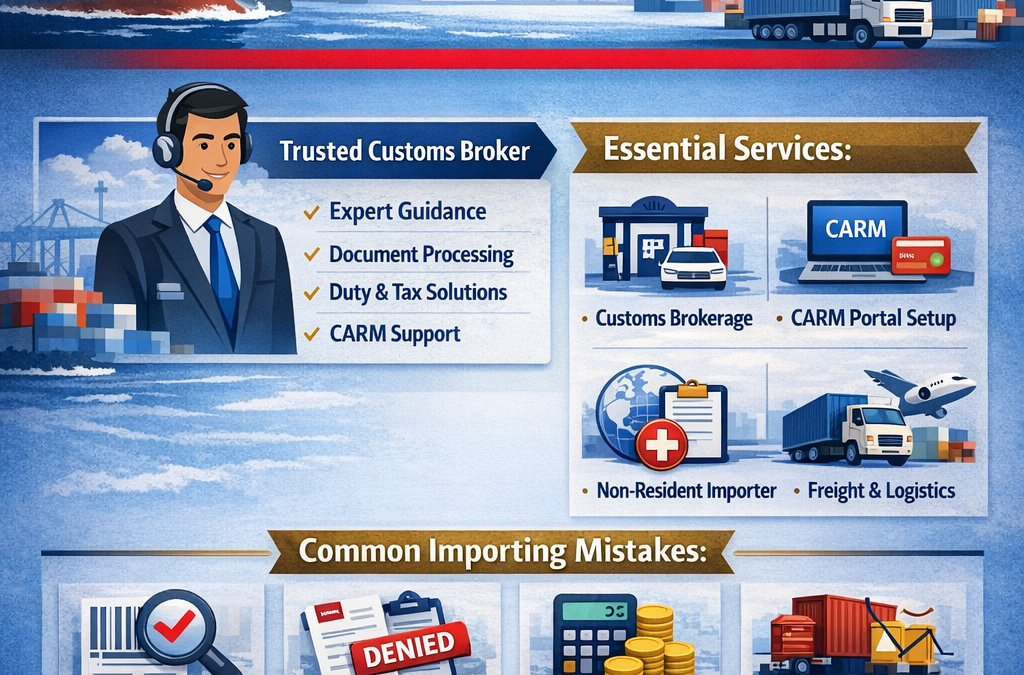

First-Time Importer in Canada: A Beginner’s Guide
If you are a first-time importer in Canada, understanding customs regulations, duties, taxes, and documentation requirements is essential to ensure a smooth importing process. Importing goods into Canada can be a great way to grow your business, but the process can seem overwhelming if you're doing it for the first time. Understanding the basic requirements before your shipment arrives can save you time, money, and delays at the border.
What Every First-Time Importer Needs
1. Obtain a Business Number (BN)
Before importing commercial goods, you need a Business Number (BN) from the Canada Revenue Agency and an Import/Export account.
2. Know Your Product Classification
Every product imported into Canada is assigned a tariff classification number. This determines:
- Duty rates
- Import restrictions
- Regulatory requirements
- Applicable taxes
Incorrect classification can result in penalties, reassessments, or shipment delays.
3. Understand Duties and Taxes
Depending on the product and country of origin, your shipment may be subject to:
- Customs duties
- GST/HST
- Excise taxes (if applicable)
- Anti-dumping or surtax measures
4. Prepare Required Documents
Common import documents include:
- Commercial Invoice
- Packing List
- Bill of Lading or Air Waybill
- Certificates or permits (if required)
Missing or incorrect documentation is one of the most common causes of border delays.
5. Ensure Compliance with Canadian Regulations
Some products require approval from government agencies before they can enter Canada. This is especially important for:
- Food products
- Health products
- Electronics
- Textiles
- Consumer goods
Why Work With a Customs Broker?
A customs broker helps ensure your shipment is cleared correctly and on time by:
✔ Classifying your products
✔ Calculating duties and taxes
✔ Preparing customs documentation
✔ Communicating with CBSA
✔ Helping avoid costly delays and penalties
How Wellington Global Link Can Help
At Wellington Global Link, we help first-time importers navigate the Canadian import process with confidence. From customs clearance and tariff classification to import consulting and freight coordination, we provide the support needed to keep your shipments moving smoothly.
Need help with your first import shipment?
Contact Wellington Global Link today for expert guidance and customs brokerage support.
📞 647-613-8338
📧 info@wellingtongloballink.com